Last Updated on May 30, 2026 by David
The movement felt beneath the feet, combined with loose grout lines and uneven clay tiles, transformed this Edwardian entrance floor in Stapenhill, Burton upon Trent, into a serious safety issue. What started as a simple cleaning task evolved into a complex challenge. Various sections of the original Victorian geometric floor shifted under pressure, indicating that previous repair attempts had failed to provide the necessary stability. The focus of the project shifted towards careful stabilisation, precise re-bedding, and sensitive restoration, ensuring the floor’s historical character was preserved while making it safe for everyday use.
Identifying Movement and Loose Grout in Victorian Tile Floors: Safety Concerns in Stapenhill
When your Victorian tile floor shows signs of movement or loose grout lines, it typically indicates deeper underlying issues than simple surface wear. The homeowner of this Stapenhill property grew increasingly concerned about the movement across different areas of the entrance floor. Shifting sections, cracked joints, and uneven levels created a significant trip hazard. Although the floor was part of an original Edwardian entranceway that retained much of its historical charm, decades of wear, previous repairs, and ongoing movement had left it vulnerable to further deterioration.
Conducting a Comprehensive Assessment of Floor Conditions
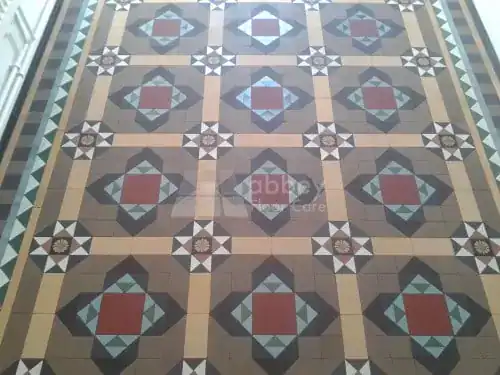
The entrance showcased a stunning array of Victorian geometric tiles, characteristic of properties from the era during Burton’s industrial growth. Years of foot traffic had led to noticeable wear in the central pathway, while the perimeter areas exhibited relative stability. Several tiles shifted underfoot, and gaps formed between adjoining sections due to unsuccessful previous repairs. The homeowner’s primary concern was safety, particularly in the entrance area that experienced heavy daily foot traffic.
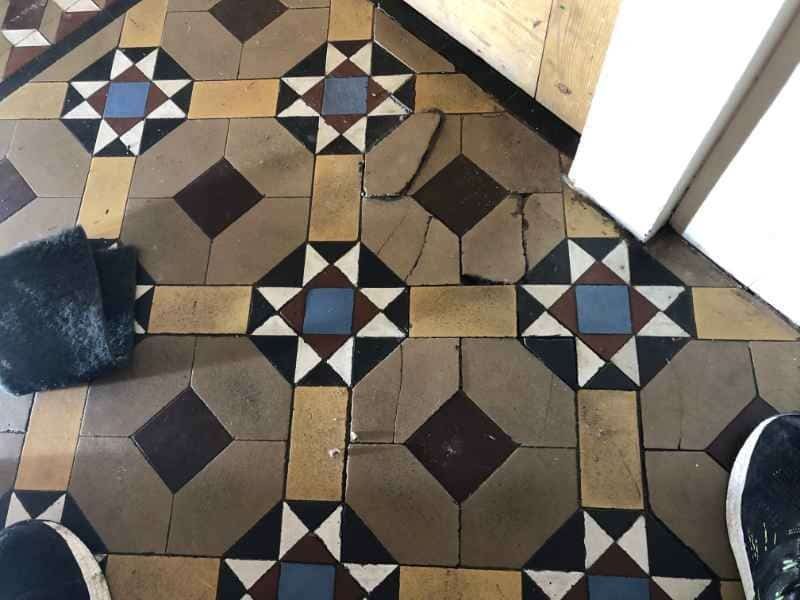
Loose grout was widespread across various sections of the floor. In some areas, earlier repair attempts had used harder materials that failed to bond effectively with the surrounding tiles. Small fragments had chipped away from the joints, exposing edges to further wear. The uneven surface between neighbouring tiles caused discomfort underfoot and gave the floor a neglected appearance, despite regular cleaning efforts.
The condition of the clay surface varied significantly throughout the hallway. Some sections retained vibrant colour and definition, while others showed dark patches where years of grime had penetrated the porous tile body. Historic clay floors of this nature gradually absorb contaminants over time, explaining why standard washing often becomes less effective as the years progress. This resulted in a floor that looked worn and inconsistent, even though the original geometric design remained largely intact.
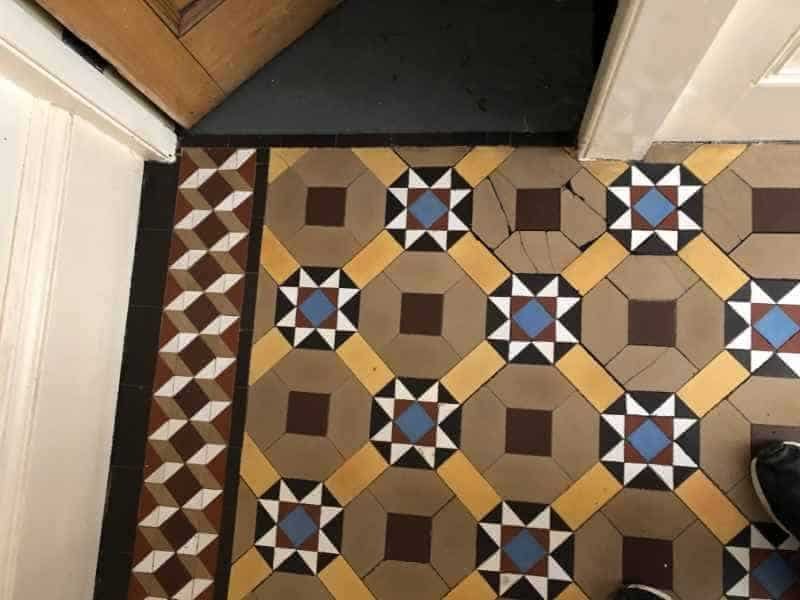
A closer inspection revealed signs of multiple previous attempts to fix isolated defects without addressing the floor as a cohesive unit. Different sections had been lifted and replaced at various times, leading to subtle discrepancies in level and alignment. Some joints contained deteriorated material that had become brittle and discoloured, while other repairs appeared significantly newer. These inconsistencies disrupted the visual harmony of the original layout.
While the entrance floor remained usable, the practical implications of the deterioration became increasingly evident. Tiles shifted slightly when weight was applied, grout continued to loosen, and the uneven surface complicated cleaning efforts. Dirt accumulated in open joints and around unstable areas, creating a cycle where the floor appeared progressively more worn. The homeowner realised that cosmetic cleaning alone would not resolve these issues, making it crucial to ascertain the full extent of the underlying problems.
The original design of the floor was one of the property’s most attractive features. Decorative borders and contrasting clay colours defined the layout, contributing to the entrance’s period character. Despite the movement and visible deterioration, most of the historic materials remained intact, amplifying the frustration of the situation. The floor seemed neglected, yet much of the original fabric still existed and was salvageable.
The project commenced with a thorough evaluation of the floor’s visible condition rather than an immediate intervention. Loose sections, open joints, worn traffic paths, and areas of previous repairs were meticulously documented. Understanding the extent of the deterioration provided clarity on the floor’s condition and set the stage for subsequent actions.
What Factors Contribute to Uneven Victorian Tiles and Failed Repairs?
Uneven tiles and open joints often indicate that prior repairs were ineffective beneath the surface. In this Stapenhill hallway, the movement affected not only individual tiles but also the interconnected areas where the supporting bed had lost stability. As the support weakened, tiles began to shift independently, and surrounding joints gradually opened up.
Loose tiles seldom fail in isolation; the support beneath them has changed.
The visible symptoms clarified why dirt accumulated quickly around the affected areas. Open joints trapped contaminants, while movement allowed debris to penetrate deeper into the gaps whenever the floor was walked on. Historic clay tiles are inherently absorbent, meaning that once dirt infiltrates weakened joints, it becomes increasingly challenging to remove through standard cleaning methods. Similar issues, along with the appropriate approach to long-term solutions, are discussed in this guide to restoring Victorian tiles properly.
Why Is Stabilising Loose Victorian Tiles Essential Before Restoration?
Repeatedly cleaning a floor with loose tiles often postpones addressing the root issue and may make ongoing deterioration easier to overlook. Once the extent of the movement had been evaluated, the planned cleaning was halted to focus on stabilising the unstable areas. Attempting restoration before stabilisation would only leave the underlying problem unresolved and potentially exacerbate the situation.
Cleaning alone would have temporarily enhanced the appearance while leaving the movement beneath the floor unchanged. Stabilisation first allowed for the careful removal of the affected tiles, elimination of unsuitable materials, and preparation of the supporting bed before relaying the original pieces in their correct positions. Damaged joints were repaired simultaneously, restoring continuity across the entire floor.
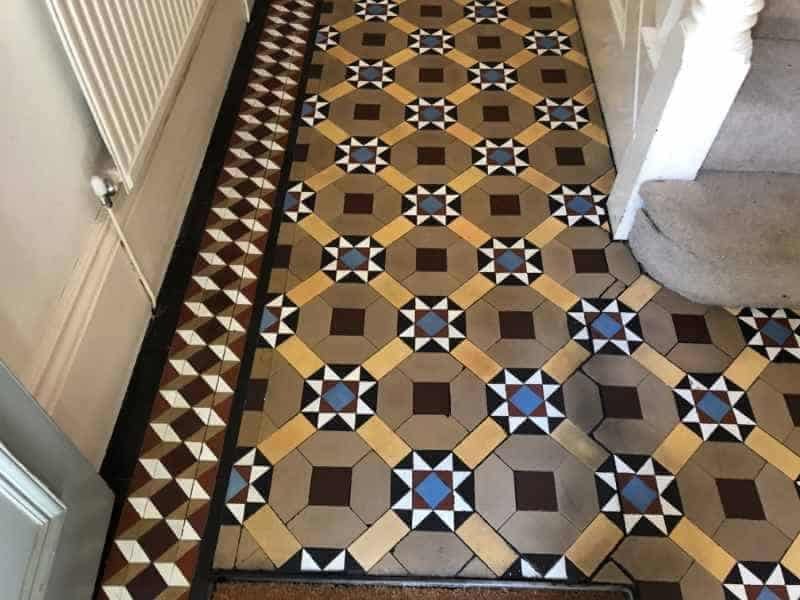
Only after addressing the structural issues could the subsequent restoration phases proceed in the correct order. This approach protected the original tiles, minimised the likelihood of future movement, and ensured that the cleaning and finishing work achieved lasting results rather than a temporary fix.
Transforming a Safety Hazard into a Functional Entrance: The Advantages of Stable Victorian Tiles
Homeowners often first notice improvements in stability following a successful Victorian tile restoration project. Once the repairs were completed, the entrance floor no longer shifted under pressure, and the previously uneven areas felt secure underfoot. Transforming the hallway from a source of anxiety into a functional, reliable entrance was a significant achievement.
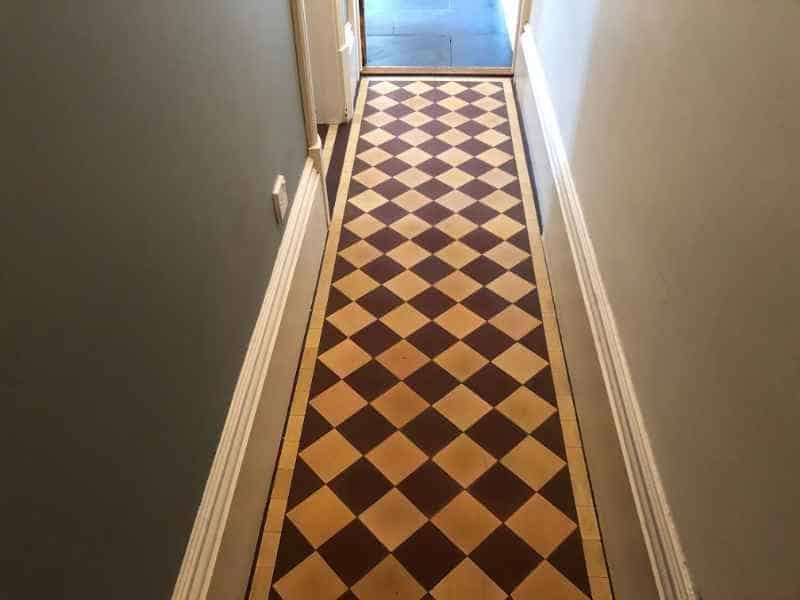
The visual improvements were equally striking. Repaired joints resulted in a more uniform appearance, while thorough cleaning revealed colours and pattern details that had been obscured by years of grime accumulation. A breathable protective treatment was applied to resist future staining while still allowing moisture to dissipate naturally through the floor structure.
A fully restored Victorian tile floor showcases the original fired matte surface with consistent colour and pattern. When a topical sealer is appropriate, it can add a subtle protective sheen without altering the character of the period floor. The completed entrance maintained its historic aesthetic while becoming safer, cleaner, and significantly easier to maintain.
Where to Find In-Depth Information on Restoring Victorian Tile Floors to Avoid Past Mistakes?
Neglecting the underlying causes of tile movement often leads to recurring issues. One of the most crucial lessons learned from this Stapenhill project was that visible symptoms seldom occur in isolation. Loose joints, uneven levels, and movement underfoot were all interconnected, and focusing solely on appearance would never provide a lasting solution.
This project also highlighted the importance of executing the work in the correct sequence. Stabilisation was the first step, followed by cleaning, joint repairs, and protective finishing. This systematic approach preserved the original clay material while delivering a practical resolution to the homeowner’s concerns.
Readers seeking broader insights can explore the main Victorian tile cleaning resource, which covers common issues, maintenance considerations, and restoration principles for historic clay floors. Understanding the causes of deterioration remains the most effective method to avoid repeating past mistakes, ensuring period entrances maintain their original character for many years.

David Allen — Abbey Floor Care
David Allen has dedicated nearly thirty years to cleaning and restoring historic clay tile floors across the UK. His expertise centres on preserving original period surfaces while addressing practical challenges such as loose tiles, failed grout, and long-term contamination.
The Article Victorian Tile Restoration Fixed A Hidden Safety Risk first found on https://www.abbeyfloorcare.co.uk
The Article Victorian Tile Restoration Reveals a Hidden Safety Hazard appeared first on https://fabritec.org
The Article Victorian Tile Restoration Uncovers Safety Hazard Was Found On https://limitsofstrategy.com