Last Updated on June 13, 2026 by David
Why Does Slate Look Glossy When Wet but Dull When Dry?
How Wet Conditions Can Mislead Homeowners About Slate’s Appearance
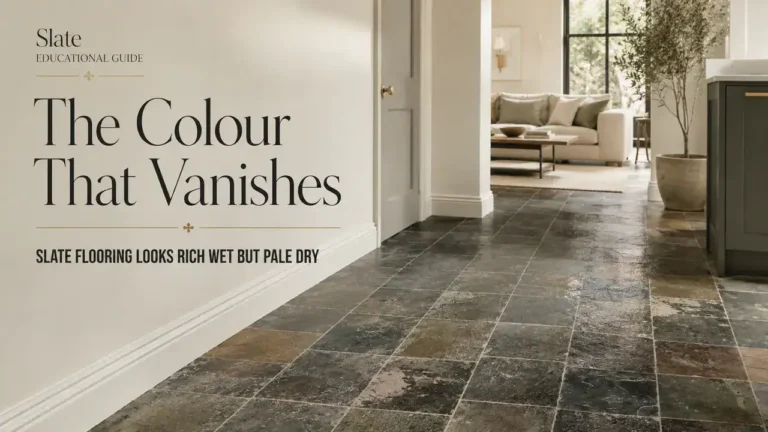
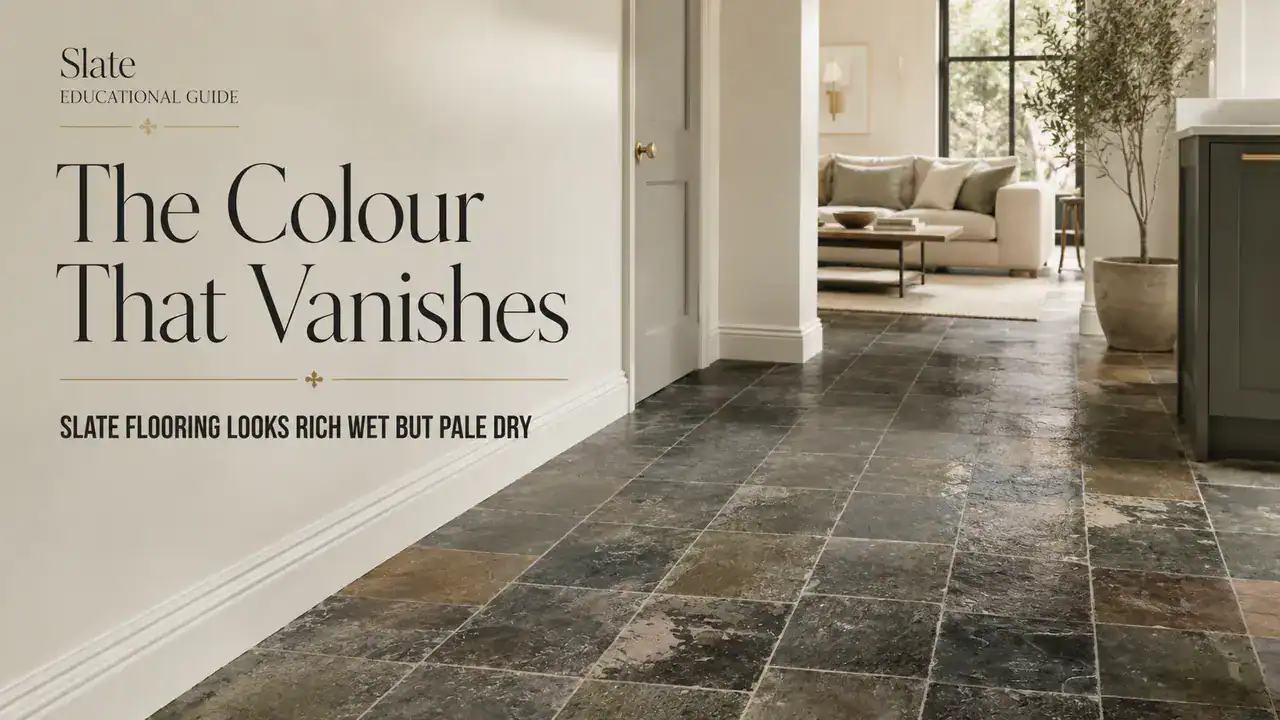
After cleaning, rain, or mopping, if your slate floor appears richer in colour, it offers a temporary glimpse of intensified hues rather than suggesting that it requires a glossy finish. Water darkens the slate surface, enhancing darker tiles, lighter seams, and textured hollows in a pleasing manner until it dries.
This momentary wet effect can create a deceptive impression of transformation, as colours seem fuller and the contrasts between tiles become more pronounced. Homeowners often make the mistake of using this temporary appearance as a benchmark to evaluate the quality of dry finishes, as the wet look does not indicate a properly sealed dry surface.
A naturally dry finish can still be appealing without resembling a freshly washed floor. In my experience, the best results achieve a balance of colour, richness, and texture, avoiding the appearance of a continually wet surface.
What Dry Slate Surfaces Reveal About Your Flooring
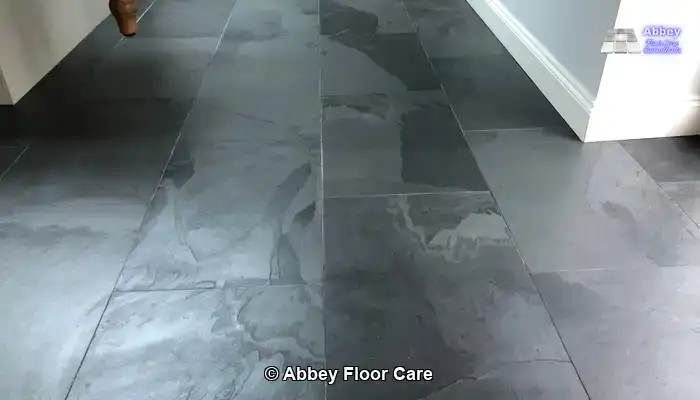
A dry, light-coloured surface can suggest neglect, even following thorough cleaning. The dry appearance highlights dullness from foot traffic, remnants of old coatings, detergent residues, and uneven absorption more clearly than the wet look. The floor might look worse when dry, not solely because it is dirty.
The most common concern arises from the stark contrast between the darker damp colour and a lighter dry hue. Some tiles retain their depth well, while others quickly appear flat, exposing pale paths in high-traffic areas like kitchens, hallways, and garden rooms.
High-traffic zones may seem faded as loose grit and regular foot traffic gradually diminish surface depth. This visible colour loss is distinct from surface dirt accumulation, meaning repeated scrubbing may yield little improvement, sometimes leaving the floor looking even more worn.
Understanding Patchiness: Surface Conditions and Sealant Issues
Patchy slate often indicates that an inappropriate product has been applied. Some patches may stem from old treatments, while others might reveal the stone beneath or be areas where the texture interacts differently with light compared to surrounding tiles.
A mechanically split slate surface has ridges and troughs that retain moisture, dirt, and residues in varying ways. This natural cleavage adds character but can result in uneven coating or treatment outcomes if the surface conditions differ from tile to tile.
Brushed slate behaves somewhat differently; its brushed finish softens the pronounced high points while maintaining texture and grip. This smoother texture feels pleasant underfoot in bathrooms and kitchens, particularly with underfloor heating, but it is essential to remember that natural slate maintains its textured surface rather than being a flat manufactured product.
How Does Dark Slate Affect Perceptions of Wear and Tear?
Black slate can amplify concerns regarding the wet-look effect because darker tiles accentuate pale stains, old product marks, and weak responses from sealers more distinctly. Chinese slate tiles may differ in porosity and mineral salt content, leading to a sealed floor exhibiting white blooms in some areas while others maintain a darker, richer colour.
A dark tile that looks stunning when damp may not require a heavy gloss finish for an attractive appearance. Instead, it might benefit from a breathable barrier, a carefully selected colour sealant, or a more subtle wet-look finish that enhances the natural stone without creating an artificial appearance.
Homeowners often choose stone oil, believing it enhances colour quickly. this rapid darkening does not ensure long-term protection and can complicate future sealing if old residues or inconsistent absorbency are present.
Setting Realistic Expectations for Slate Finishes
A well-executed slate finish should considerably enhance the floor’s appearance compared to its previous state, often making it look better than when it was initially installed, especially with the right sealer matched to the stone. Newly installed slate flooring is often under-protected, over-coated, or treated with unsuitable products.
An effective finish preserves natural variations while minimising distracting contrasts between dull patches and richer areas. Slate flagstones rely on texture to display visible character, while riven slate floor tiles use thickness and grip to cope with genuine foot traffic. The charm of natural slate tiles lies in their colour variation, so the ideal outcome should enhance this character rather than obscure it.
The dry finish takes precedence, as it reflects the floor’s daily appearance. The desire for a wet look only becomes relevant when viewed separately from unrealistic gloss expectations, as the floor must remain functional in kitchens, bathrooms, hallways, and other areas with heavy foot traffic.
What Factors Influence Colour Variations in Slate Across Different Floors?
The colour response of slate can vary significantly; one floor may absorb water, sealant, and wear differently from another, even if both are classified as natural slate. Dense Welsh tiles typically exhibit high density and low porosity, while softer imported slates may darken more rapidly due to a higher liquid absorption rate, leading to a more noticeable colour change.
A mechanically split surface introduces additional light variation because natural cleavage creates small elevations and depressions across the tile. In contrast, brushed slate has a lightly riven texture with a smoother surface, potentially leading to a subtler response under the same sealant. For a more comprehensive understanding of why some slate retains its vibrancy while others fade, refer to this article. This differentiation is vital, as selecting the right sealer should align with the floor’s behaviour rather than relying solely on product labels.
Why Do Sealed Slate Floors Sometimes Show Uneven Moisture Absorption?
A slate floor that appears sealed can still absorb moisture unevenly, particularly in areas affected by traffic, texture, and wear. While the edges may retain their shine or low sheen, heavily trafficked paths, grout joints, and exposed ridges will absorb water and darken more quickly.
Uneven moisture absorption is significant because a protective layer can exist without providing uniform protection. A breathable finish should permit moisture vapour movement while enhancing stain resistance, dirt resistance, and long-term durability. Worn areas may require surface consolidation to restore consistent behaviour across the floor.
A visual assessment alone may be misleading, as old coatings could sit atop a porous surface. A thorough inspection is crucial to determine whether the protective barrier is intact, whether the surface texture remains open, and whether resealing would create a natural appearance or highlight irregularities in the finish.
How Can Similar Sealers Produce Different Results on Slate Floors?
The selection of sealer can become problematic when homeowners expect every slate floor to darken uniformly. A finely honed slate floor presents a smooth, consistent surface that diffuses light evenly, while an impregnating sealer maintains the natural riven texture, and a topical sealer adds a subtle sheen to the surface.
Natural protection retains a surface appearance close to its dry state, as penetrating protection reduces absorption without forming a visible film. This invisible barrier is advantageous for floors where the natural colour already appears balanced.
Colour enhancement employs mineral activation, pigment deepening, and impregnating protection to create greater visual richness while still allowing for a breathable barrier. The same effect may appear refined on one floor while looking overly heavy on another, as the stone’s porosity and texture govern the final colour outcome.
Surface coatings can provide a satin finish through acrylic applications, but their lower durability and limitations in high-traffic areas make topical protection risky when wear lanes are already evident. A poorly selected surface film can excessively darken weak areas, leading to an artificial appearance.
How Do Dirt, Residues, and Old Sealers Obscure Slate Colour Assessment?
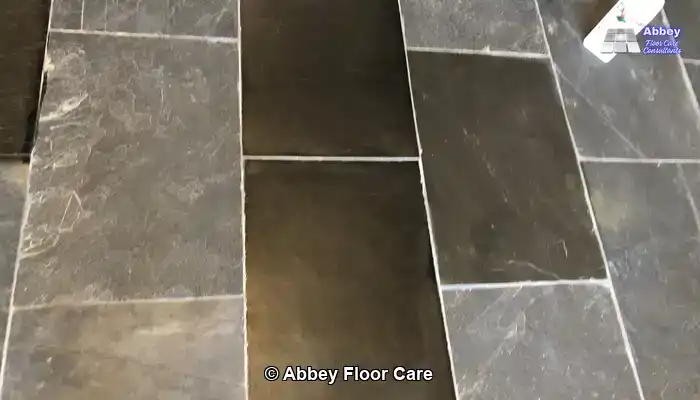
Residues and old sealers can make a slate floor appear as though it requires additional sealing when the real issue lies in distorted colour. Soap residues create a sticky film, cloudy water deposits leave traces of detergent, and repeated mopping can push dirty water into grout joints.
Coating build-up often accumulates as edge residues and deposits in recessed areas due to the uneven wear of the textured surface. An older acrylic coating can leave excess in low points, while foot traffic diminishes protection from the centre of the tile, leading to finish inconsistencies long before any new sealing can be considered.
Traffic film can obscure the true colour of the slate until the surface is properly assessed. This evaluation is vital because cleaning slate before old sealers trap dirt addresses a different issue than simply selecting a darker finish. A professionally restored and properly sealed floor is much easier to clean and maintain than one that has been improperly treated or worn.
Why Is Thorough Cleaning Essential Before Making Sealing Decisions?
Selecting a sealer without first revealing the true condition of the cleaned slate raises the risk of trapping the wrong colour, residue, or patch patterns. The floor must be adequately cleared to assess absorbency, coating residues, and the natural response of the textured finish.
Cleaning serves as a critical interpretive step rather than merely a procedural task. Slate is a fine-grained metamorphic rock that cleaves along natural planes; its layered structure prevents mechanical polishing and confines restoration to cleaning and sealing. This structure makes it sensitive to harsh cleaning agents.
Proper cleaning reveals whether a breathable finish can facilitate reduced maintenance and a natural appearance or whether old products have left behind a protective barrier that requires additional attention. Routine care practices are discussed in how to clean slate floors when they appear dull. Correct maintenance involves removing grit before wet mopping and using pH-neutral cleaners to help sealed slate retain an even colour.
What Sets Colour-Enhancing Sealers Apart from Standard Sealers for Slate?
Colour-enhancing sealers alter how slate reflects light, affecting both its appearance and protection. This treatment relies on mineral pigment activation, colour deepening, and visual richness rather than merely making the floor look cleaner or newer.
Colour enhancement modifies light response; it does not restore damaged slate to a new condition.
A micro-porous sealer is evaluated on more than just colour, as a breathable finish must support moisture vapour movement, stain resistance, and long-term protection. A darker finish can be appealing only when the floor has a dry substrate, a stable surface, and an even sealer response.
A topical urethane sealer provides a more pronounced wet-look finish through a urethane coating, gloss sheen, and wear resistance. This durable option still requires a clean, dry surface, as poor adhesion can result in an impressive finish becoming patchy or peeling.
What Challenges Arise from Applying Incorrect Wet-Look Finishes?
Using the wrong wet-look finish can leave a slate surface looking patchy, artificial, and difficult to rectify later. Peeling indicates sealer failure, which signifies that the coating has lost its bond with the surface; homeowners may notice flaking, dull patches, or shiny edges. Correcting this necessitates the removal of the failed layer before applying any new finish.
An acrylic topical sealer may provide immediate surface protection, but these coatings generally have lower durability in high-traffic areas and can create visible wear patterns. A topical urethane sealer offers enhanced wear resistance, yet it still fails under necessary dry substrate conditions or when residues remain beneath the surface film.
Delamination refers to the separation of layers along natural slate planes; homeowners see flaking or loss of lamination rather than simple coating peeling. Simply adding more sealer cannot repair structural breakdown. The causes of flaking are explained in this article. Setting realistic expectations is essential because a finish can protect a stable surface, but it cannot restore weak mineral layers to a solid tile.
Why Does Sealed Slate Need Regular Maintenance for Colour Consistency?
A sealed slate floor continues to evolve with daily use, as traffic, grit, and washing habits influence how evenly the surface wears. High-traffic areas often develop lighter pathways as loose grit leads to micro-wear, dulling the surface and reducing colour vibrancy in frequently used zones.
The textured surface necessitates maintenance that removes abrasive particles before they are dragged across the tile. Using a well-wrung mop, clean rinse water, and a residue-free, pH-neutral stone cleaner helps protect porous slate without oversaturating the riven surface.
Steam cleaning should be avoided, as heat can damage coatings, force moisture penetration, and trigger sealer breakdown. Proper ongoing maintenance — involving pH-neutral cleaning, grit removal before wet mopping, and resealing at appropriate intervals — is vital for extending the floor’s lifespan. Cleaning slate floors safely highlights the importance of adhering to finish-safe routines. The result is more consistent colour and a floor that stays cleaner with less effort.
How Can the Water-Drop Test Determine the Need for Resealing Slate?
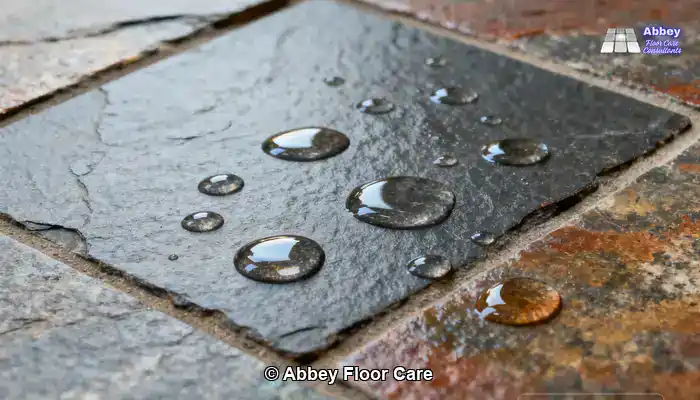
If you are uncertain whether your slate requires resealing, the water-drop test provides a straightforward method to evaluate the surface’s condition. This test effectively distinguishes because water beads on a functional protective layer while soaking in where the sealant has weakened, initially darkening porous areas subjected to heavier foot traffic.
- Drop small amounts of water on a busy walkway, an edge area, and a less-trafficked tile.
- Observe whether the droplets bead up or absorb during the same brief observation period.
- Consistent beading indicates that the protective layer retains effective sealability.
- Uneven darkening suggests moisture absorption and implies that resealing may soon be necessary.
This test does not solely dictate a product choice, as colour enhancement and breathable protection still depend on the condition of the floor’s surface. A natural-looking protective barrier may suffice where water beads evenly, while uneven absorption signals that further evaluation of the slate is necessary before applying a darker finish.
What are the Recommended Steps for Cleaning, Sealing, or Colour Correction of Your Slate?
The appropriate next step depends on whether the floor requires cleaning, resealing, colour enhancement, or assistance with old sealer failure. A floor with residues necessitates thorough interpretation prior to sealing, while a floor exhibiting weak colour response may benefit from pigment deepening through a breathable protective system.
Understanding the implications of old surface films is crucial, as acrylic coatings, topical excess, and urethane coating failures must be grasped before discussing a new wet-look finish. A floor suffering from old sealer failure necessitates a different approach compared to one needing long-term protection.
Broader slate behaviour, UK floor construction, and long-term maintenance considerations are explored in this article. Project examples assist homeowners in understanding the interplay between cleaning and sealing, while this case study underscores the importance of evaluating the surface before selecting the finish.

David Allen — Abbey Floor Care
David Allen has specialised in slate floors and various natural stone surfaces for over 30 years at Abbey Floor Care. His expertise in sealing, resealing, and addressing colour response issues helps homeowners understand why natural slate can appear rich when wet yet uneven when dry. He emphasises that the right finish must correspond to the floor’s texture, absorbency, and existing coating history.
The article Slate Flooring Looks Rich Wet But Pale Dry first appeared on https://www.abbeyfloorcare.co.uk
The Article Slate Flooring: Strikingly Rich When Wet, Subtly Pale When Dry appeared first on https://fabritec.org
The Article Slate Flooring: Rich and Subtle Colours for Your Home Was Found On https://limitsofstrategy.com
References:
https://berwicktestandtag.com.au/slate-flooring-enhance-your-home-with-rich-subtle-hues/