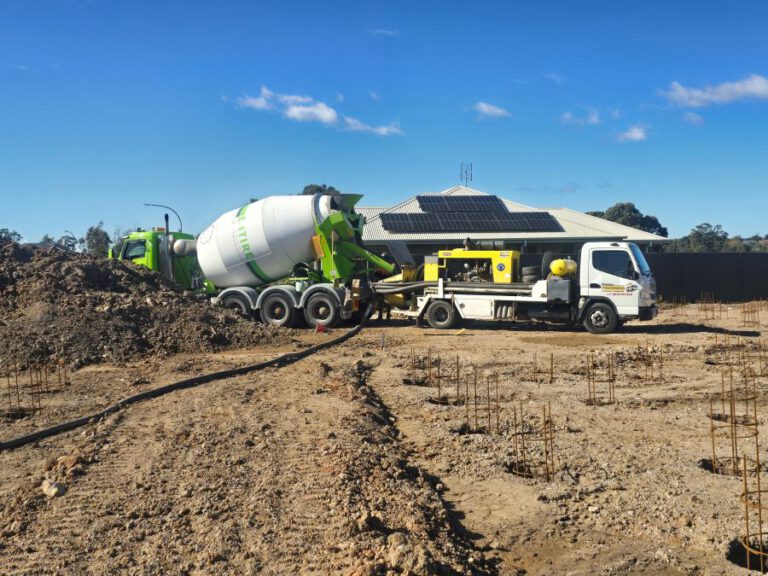
To ensure safety during concrete pumping operations, it is crucial to follow five key protocols: employ a qualified and licensed operator, set the pump on stable ground with fully extended outriggers, maintain safe distances from overhead power lines, carry out thorough pre-start inspections of hoses, clamps, and the hopper grate, and establish an exclusion zone while conducting a safety briefing before commencing the first load. The guidelines provided by SafeWork NSW outline potential risks and control measures associated with the operation of concrete placing equipment, which this guide aims to reflect.
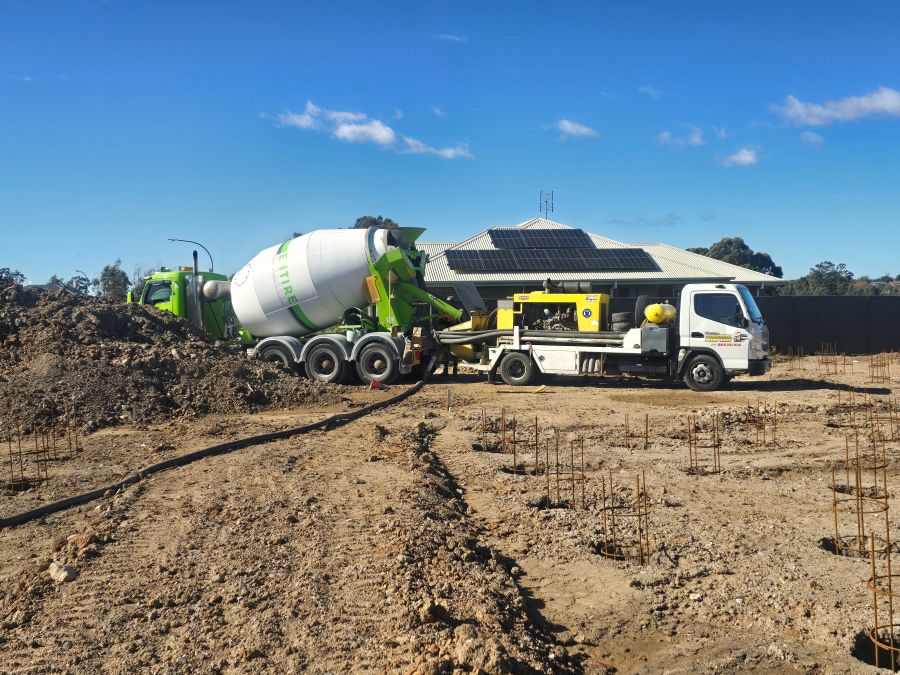
Essential Safety Protocols for Concrete Pumping Operations
- In NSW, it is mandatory to hold a PB class high-risk work licence to operate a concrete placing boom.
- Responsibilities must be distributed between the line pump operator and the line hand, ensuring they are two distinct individuals.
- A concrete boom operator lacking training must maintain a minimum distance of 3 metres from power lines up to 132,000 volts.
- Ensure that flexible hoses on a line pump are securely fastened during priming and when clearing blockages.
What Are the Key Risks Associated with Concrete Pump Operation?
Recent records from SafeWork NSW reveal numerous incidents involving concrete placing equipment. These incidents include failures in pipelines and couplings leading to concrete leaks under pressure, breakdowns of boom components, collisions of booms with overhead power lines, and delivery hoses whipping during operation. Other risks comprise boom pumps tipping over and workers reaching into moving parts due to modified, broken, or missing hopper grates. Hose whip incidents, in particular, have resulted in serious injuries and fatalities.
The accompanying fact sheet outlines several hazards that workers may face during the setup or operation of a concrete pump:
- Steep slopes or unstable ground that cannot support the pump’s weight
- Using the pump for unintended purposes or exceeding its design specifications
- Contact with overhead power lines
- Collisions with personnel, structures, or other equipment, such as concrete agitator trucks
- Uncontrolled hose whip or line movement
- Sudden release of concrete or pump components due to failure or blockage
- Crush points, moving parts, and confined spaces
- Exposure to diesel fumes and excessive noise
- Slippery surfaces and potential trip hazards
1. Hire a Licensed and Competent Concrete Pump Operator
SafeWork NSW stipulates that both concrete pump operators and surrounding workers must possess the necessary training and competency in the specific type and model of pump being used, as well as hold the appropriate high-risk work licence. For boom pumps, this licence falls under the concrete placing boom (PB) category, which includes both truck-mounted and satellite-mounted booms. Operators should also understand the manufacturer’s operational limits for each pump.
It is essential for the operator and the line hand to be separate individuals when operating line pumps. The fact sheet specifies that the operator must maintain control of the pump at all times, ensuring it can be promptly stopped if a blockage or leak occurs. If the discharge hose remains fixed throughout the pour, such as at a lift base, a line hand may not be required. When operating truck-mounted booms, one individual may effectively manage both the boom and the pump.
If your primary contractor requests a verification of competency (VOC) record for the pump operator, please inform us during the booking process so we can prepare the necessary documentation ahead of the pour day.
2. Position the Concrete Pump on Stable and Secure Ground
Among the incidents documented by SafeWork NSW is the tipping of a boom pump. The fact sheet emphasises the need to evaluate ground conditions and the structural integrity beneath a suspended slab when determining the pump’s placement. The pump must be set up to allow for the full extension of the outriggers.
Proper positioning should create an exclusion zone around the pump, keep the boom clear of nearby structures, and maintain safe distances from power lines. For sites with limited access, our guide on concrete pumping in confined spaces offers effective strategies for planning the pump’s location.
3. Maintain Safe Distances from Overhead Power Lines
The SafeWork NSW Work near overhead and underground electric lines Code of Practice (May 2026) includes guidelines for concrete placing booms within its section on cranes and mobile plants. According to this code, a worker without training in electrical line hazards is regarded as an ordinary person. For mobile machinery operated by such individuals, Table 1 of the code specifies approach distances: 3.0 metres from overhead lines up to 132,000 volts, 6.0 metres for lines up to 330,000 volts, and 8.0 metres for lines exceeding 330,000 volts.
The code further mandates that a safety observer must be present when a crane, mobile plant, or its load is in motion and may come within the designated distances. The observer’s role is to alert the operator and crew to uphold the appropriate distances and identify any other unsafe conditions. Trained personnel working alongside an observer can operate within the reduced distances specified in Table 2 of the code.
Before booking a boom pump, assess the area from both the truck’s parking location and the boom’s reach. Bring up any nearby power lines during your call, allowing us to strategically plan the pump’s position.
4. Perform Pre-Start Inspections on Hoses, Clamps, and Hopper Grate
SafeWork NSW underscores the importance of pre-operational checks for all concrete placing equipment. Inspections, testing, and maintenance should be conducted in accordance with the manufacturer’s guidelines. The fact sheet highlights two critical checks that must be performed prior to operating the pump: verifying the functionality of the interlock on the hopper grate and ensuring that safety pins are properly secured to each delivery line clamp.
The interlock on the hopper grate plays a vital role; opening the grate or activating the emergency stop should halt all hazardous moving parts and relieve accumulator pressure. These safety mechanisms must never be modified, bypassed, or disabled. All inspections and maintenance activities should be documented, with Australian Standard AS 2550.15:2019 (Cranes, hoists and winches, Safe use, Concrete placing equipment) providing additional insights into inspection protocols.
Preventing Hose Whip in Concrete Line Pumping
Hose whip refers to the uncontrolled movement of a flexible delivery hose under pressure. SafeWork NSW advises that flexible hoses on line pumps must be secured during line priming or when clearing blockages. Avoid attaching a coupling to the end of a line pump while it is operational.
5. Establish Exclusion Zones and Conduct Safety Briefings Before Concrete Pouring
SafeWork NSW mandates that the pump must be positioned to allow for a pedestrian exclusion zone to be established and maintained around it. Traffic management or spotters should be deployed as necessary. During our pours, the exclusion zone ensures that no individuals stand beneath the boom or directly in front of the discharge hose, with barriers or flagging clearly marking the area.
The fact sheet also recommends discussing the pour’s implications with key parties prior to setting up the pump. This includes the principal contractor, other trades on site, your workers, local authorities, and individuals in neighbouring properties. Before the pump’s operation, the crew’s safety briefing should cover:
- Site access and hose routing
- Emergency procedures and first aid plans
- Designated staging and wash-out locations for agitator trucks
- Slip hazards and personal protective equipment (PPE)
- Identification of the spotter, if necessary
- Coordination of the pour
One individual should be appointed to call the pour. This person will coordinate the actions of the agitator drivers, hose handlers, site supervisor, and concrete workers, ensuring that everyone receives instructions from a single source.
Is There a Specific Code of Practice for Concrete Pumping in NSW?
The SafeWork NSW fact sheet on concrete placing equipment references three codes of practice and one Australian Standard for further guidance:
- Managing the Risks of Plant in the Workplace Code of Practice
- How to Manage Work Health and Safety Risks Code of Practice
- Work Near Overhead and Underground Electric Lines Code of Practice
- AS 2550.15:2019 Cranes, Hoists and Winches, Safe Use, Concrete Placing Equipment
The Work Health and Safety Act 2011 outlines the responsibilities for all parties involved, from the individuals who design and supply the pump to the principal contractor, the pump operator, and the workers present on site.
How Hunter Concrete Pump Hire Guarantees Safety During Your Concrete Pour
Every pour we undertake begins with a meticulous inspection of the equipment, including hoses, reducers, couplings, clamps, boom seals, and emergency shutoff systems. The pump will not commence operation until it has successfully passed all safety checks. Our operators are fully trained, licensed, and insured, adhering strictly to the SafeWork NSW guidelines for concrete placing equipment throughout Newcastle, Maitland, Port Stephens, and the Hunter region.
Do I Need to Provide Spotters or Safety Personnel for My Concrete Pour?
For civil and commercial projects, yes. For residential pours, our pump crews will manage the safety zone surrounding the pump and hose. We will inform you of your site’s specific requirements when providing a quote.
Can the Line Pump Operator Also Manage the Hose?
According to SafeWork NSW, the line hand and the line pump operator must be two distinct individuals. The operator must maintain control of the pump to ensure it can be rapidly stopped if the line becomes blocked or leaks. A line hand may not be necessary if the hose remains stationary throughout the pour.
What Should I Assess on My Site Before the Concrete Pump Arrives?
Ensure that the ground where the pump will be parked is firm and level enough to support the outriggers. Check for overhead power lines near the pump and pour area, look for trip hazards along the hose route, and identify where the agitator trucks will wait and wash out. Our guide on common mistakes when hiring a concrete pump offers detailed information about the booking process.
Secure Your Concrete Pump with Comprehensive Safety Inspections
Inform us of the pour location, how the pump can access it, and any overhead or underground obstacles that may pose a risk. We will collaborate with you to plan the pump’s position, hose route, and exclusion zone ahead of the pour day.
Concrete Pump Hire
Original Article First Published At: Concrete Pumping Safety on Site: 5 Protocols Every Crew Should Follow on NSW Pours
The Article: Concrete Pumping Safety: 5 Essential Protocols for NSW Sites first appeared on https://writebuff.com
The post Concrete Pumping Safety: 5 Key Protocols for Nsw Sites appeared first on Limits Of Strategy.
References:
Concrete Pumping Safety: 5 Essential Protocols for NSW Sites